
The CDC has issued a clear signal heading into tick season 2026: tick bite-related emergency room visits are at their highest rate in nearly 10 years.
During the second week of April 2026, 71 out of every 100,000 emergency room visits were for tick bites, according to CDC data reported by The Hill and the New York Post. The Northeast is bearing the brunt of the surge — in that same period, 163 out of every 100,000 ER visits in the Northeast were tick-related, up sharply from 52 per 100,000 in March.
The CDC recommends steering clear of wooded and brushy areas with high grass and leaf litter, and advises checking animals that go outside every day during warm weather. But public health experts are clear that for ticks, unlike mosquitoes, there is no broad area-wide control. Protection is largely an individual responsibility.
What's Driving the Spike
Byron Backenson, director of the Bureau of Communicable Disease Control at the New York State Department of Health, points to warming temperatures as a key factor in extending tick season and expanding tick activity. Snow, counterintuitively, also helps tick populations survive winter: "When they make it through the winter, that snow almost acts like an insulating blanket, and the temperature at the bottom of that snow cover is pretty constant and it's just barely below freezing," Backenson told the New York Post.
In New York State alone, Lyme disease cases have averaged more than 17,500 per year over the last three years. In Michigan, confirmed cases nearly quadrupled between 2022 and 2025. The Northeast accounts for the highest concentration of tick bite ER visits nationally, followed by the Midwest.
Ticks Spread More Than Lyme Disease
While Lyme disease is the most well-known tick-borne illness, the CDC reports that ticks can spread bacteria, viruses, and parasites causing more than a dozen diseases — including anaplasmosis, babesiosis, ehrlichiosis, Rocky Mountain spotted fever, Powassan virus, and Bourbon virus.
The Lone Star tick, increasingly prevalent in the Northeast, is also the primary carrier of alpha-gal syndrome — a potentially fatal red meat allergy. In 2024, a New Jersey pilot died after eating a hamburger while unknowingly carrying the condition.
What to Do After a Tick Bite
Finding a tick on your body does not automatically require an ER visit — but it does require prompt, correct action.
Step 1: Remove it immediately and correctly. Use fine-tipped tweezers and grasp the tick as close to the skin as possible. Pull upward with steady, even pressure. Do not twist, jerk, or squeeze the tick's body. Do not apply petroleum jelly, nail polish, or a match flame — these can cause the tick to regurgitate into the wound, increasing infection risk. (CDC)
Step 2: Clean the area. Wash the bite site thoroughly with rubbing alcohol or soap and water. Clean your hands as well. (CDC)
Step 3: Save the tick. Place it in a sealed bag. If symptoms develop, having the tick available for identification can help your doctor assess your risk.
Step 4: Monitor for symptoms. Watch for a bull's-eye rash, fever, fatigue, headache, or muscle and joint aches in the 3 to 30 days following the bite. (CDC)
Step 5: Know when to seek care. Seek medical attention if a rash appears, if you develop fever or neurological symptoms, or if the tick appeared to have been attached for 36 hours or more. A doctor can assess whether a single prophylactic dose of antibiotics is appropriate based on your risk factors. (CDC)
The Individual Protection That Actually Works
Backenson's personal tick prevention protocol, shared with the New York Post:
- Wear light-colored, long-sleeved clothing in wooded or grassy areas
- Treat clothing and gear with permethrin
- Tuck pants into socks
- Do thorough tick checks after every outdoor activity — nymphs in late spring and early summer can be the size of a poppy seed and are easy to miss
- Put outdoor clothing in a hot dryer for 10 minutes immediately after coming inside
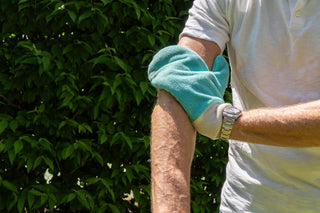
Having the right removal tool on hand before you need it is part of that preparation. TiCK MiTT is a chemical-free, scientifically-developed fabric glove that removes ticks safely in seconds — no tweezers, no chemicals, safe for kids and pets. When the CDC data is telling you tick bites are at a decade high, the time to be ready is before you find one.
Featured on Shark Tank Season 16 and named a TIME Best Invention. Available at Petco, Bass Pro Shops, and tickmitt.com.
→ [Shop TiCK MiTT — Be Ready Before Tick Season Peaks]
Sources: The Hill (CDC tick bite ER data reporting, April 21, 2026); New York Post (tick and mosquito surge reporting); CDC; Byron Backenson, NYS Department of Health


