
A tick bite that causes a red meat allergy sounds like something out of a medical thriller — but it's real, it's spreading, and it's now showing up in states that weren't on the radar just a few years ago.
You packed the sunscreen. You've got water bottles, snacks, and bug spray. You're ready for the trail, the backyard, the Saturday soccer game, or the camping trip you've been planning since February.
But there's a tick out there that most families haven't heard of — and it's spreading into new territory. It's called the lone star tick, and beyond the usual concerns about Lyme disease, it carries a risk that's genuinely surprising: a bite from this tick can trigger a lifelong allergy to red meat.
That's not a typo.
Here's what every family spending time outdoors needs to know — and what you can do about it.
What Is the Lone Star Tick?
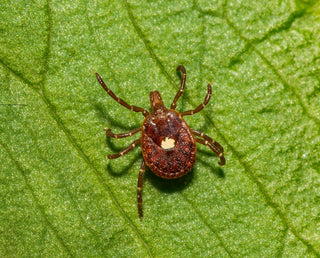
The lone star tick (Amblyomma americanum) gets its name from the single white dot on the adult female's back — a tiny star you can actually see if you know what to look for.
It's historically been a southern tick, most common in states like Arkansas, Texas, and the Carolinas. But forest regrowth, warmer winters, and growing deer populations have helped it expand its range significantly. Today, lone star ticks have been documented in Pennsylvania, New Jersey, New York, and even as far as Montana and the Pacific Northwest.
In Pennsylvania — a state that literally translates to "Penn's Woods" — lone star ticks have been confirmed in Bucks, Chester, Delaware, and Philadelphia Counties since 2011. And now Pennsylvania health officials are taking notice. As of early 2026, the state is formally tracking alpha-gal syndrome cases after identifying around 600 cases in just two years based on voluntary reports, according to a May 2026 report from The Philadelphia Inquirer.
One thing to know: lone star ticks are aggressive. Unlike the deer tick, which waits for a host to brush by, lone star ticks actively pursue their targets. That matters for families with kids running through grass and dogs who love to explore.
What Is Alpha-Gal Syndrome (AGS)?
Alpha-gal syndrome is a delayed allergic reaction triggered by a bite from a lone star tick. During the bite, the tick can transmit a sugar molecule called alpha-gal into your bloodstream. In some people, the immune system learns to treat alpha-gal as a threat — and since that same molecule exists in beef, pork, lamb, dairy products, and gelatin, eating those foods later can cause a serious allergic reaction.
The reaction typically happens 3–6 hours after eating red meat, which is one reason it's so hard to diagnose. By the time symptoms appear, the meal is a distant memory. Many people don't connect the dots for months or even years.
Symptoms can range from hives and stomach pain to something much more serious: anaphylaxis.
In 2025, a New Jersey man became the first documented death from alpha-gal syndrome in the U.S. after eating a hamburger. That milestone prompted health officials across the Northeast — including Pennsylvania — to take formal action on tracking.
How Common Is It, Really?
More common than most people realize.
The CDC estimates that nearly 450,000 Americans may have alpha-gal syndrome. A 2025 study presented at the American College of Gastroenterology found a 100-fold increase in positive alpha-gal antibody tests between 2013 and 2024. The incidence rate climbed from under 2% of tests to nearly 39%.
New Jersey, which has been tracking alpha-gal cases since 2022, recorded just under 500 confirmed cases in 2025 alone. Pennsylvania expects those numbers to grow as testing and awareness improve.
And here's what makes this even more complex: recent research shows the deer tick — the most common tick in Pennsylvania — may also be capable of triggering alpha-gal syndrome. "It's not just the lone star tick anymore," said Nicole Chinnici, director of the Pennsylvania Tick Research Lab at East Stroudsburg University.
Who Is at Risk?
Anyone who spends time outdoors in areas where lone star or deer ticks are present.
That's a wide net. It includes kids playing in the backyard, families hiking on trails, dog owners doing post-walk tick checks, and outdoor workers. You don't have to venture deep into the woods — ticks live in leaf litter, tall grass, and the edge zones between lawns and wooded areas.
Not everyone who gets bitten will develop AGS. "It could occur after one bite. It could occur after several bites, or you may be someone who can be exposed to ticks and never have a reaction at all," Chinnici said. But the risk is real, and it rises with repeated tick exposure.
What Are the Symptoms?
The symptoms of alpha-gal syndrome can include:
✅ Hives, rash, or skin flushing — often appearing hours after a meal
✅ Stomach cramping, nausea, vomiting, or diarrhea
✅ Swelling of the lips, throat, or tongue
✅ Difficulty breathing
✅ Anaphylaxis — a severe, life-threatening allergic reaction
Reactions typically occur 3–6 hours after eating red meat, dairy, or products containing gelatin (like gummy vitamins, marshmallows, or certain medications). That delay is part of what makes diagnosis so tricky.
If you or someone in your family experiences unexplained allergic reactions after meals — especially after recent tick exposure — talk to a doctor about alpha-gal testing. A blood test can identify the antibodies.
The Foods (and Products) to Watch
Once someone has AGS, they need to avoid:
✅ Red meat — beef, pork, lamb, venison, bison
✅ Dairy products — some patients react, others don't; it varies
✅ Gelatin — found in Jell-O, marshmallows, gummy candies, vitamins
✅ Some medications — heparin (a blood thinner) is derived from pigs
✅ Some vaccines and personal care products that contain animal-derived ingredients
The good news: chicken, turkey, and fish do not contain alpha-gal, so poultry and seafood remain safe.
How to Protect Your Family
The best way to avoid alpha-gal syndrome is to prevent tick bites in the first place. Prevention works. Here's what that looks like in practice:
✅ Treat clothing with permethrin. Apply to pants, socks, shoes, and hiking gear. Permethrin binds to fabric and remains effective through multiple washes.
✅ Use EPA-registered insect repellent on skin. DEET, picaridin, and oil of lemon eucalyptus are all effective options recommended by the CDC.
✅ Tuck your pants into your socks. Yes, it looks a little goofy. It works. Lone star ticks are low to the ground and crawl up — tucking stops them before they disappear under clothing.
✅ Do a thorough tick check after every outing. Check the whole family — and the dog — before coming inside. Pay special attention to the scalp, behind the ears, underarms, back of the knees, and waistband. Lone star ticks are fast movers, so check carefully.
✅ Check your pets too. Dogs can carry ticks into the house, putting the whole family at risk — even people who didn't go outdoors. Check ears, collar area, armpits, groin, between toes, and under the tail.
✅ Remove ticks promptly. Most tick-borne diseases — including the pathway to alpha-gal — begin with the tick feeding. The faster you find and remove a tick, the lower your risk.
What to Do If You Find a Tick
Remove it correctly. Here's the right way:
- Use fine-tipped tweezers or a tick removal tool like the SiDEKiCK
- Grasp as close to the skin as possible
- Pull upward with steady, even pressure — no twisting or jerking
- Clean the bite area with rubbing alcohol
- Save the tick in a small bag with the date, in case symptoms develop later
Never use petroleum jelly, nail polish, or a lit match. These methods cause the tick to regurgitate, which can actually increase the risk of disease transmission.
Make Tick Checks Part of Your Routine
At TiCK MiTT, we think about tick checks the way most people think about sunscreen — something you build into the routine, not something you panic about after the fact.
Our chemical-free microfiber TiCK MiTT was designed to make post-outdoor tick checks faster and more effective for the whole family. Just swipe the mitt over skin, clothing, and pet fur — ticks stick to the microfiber on contact. In product trials, it achieved a 90%+ tick capture rate. After use, toss it in the dryer for ten minutes (dryer bag included) to safely dispose of any ticks, and it's ready to go again.
TiCK MiTT founder Olivia Abrams developed the product after her own experience with Lyme disease — and her work with Project Lyme as a board member keeps her connected to the latest research on tick-borne illness. Alpha-gal syndrome and the expanding range of the lone star tick are exactly the kind of emerging threats that make regular tick checks non-negotiable.
Tuck a TiCK MiTT in your hiking pack, hang one by the back door, or grab a family bundle to keep one everywhere it's needed. Because the best tick story is always the one where you found it — before it found you.
Frequently Asked Questions
What is alpha-gal syndrome?
Alpha-gal syndrome (AGS) is an allergy to a sugar molecule called alpha-gal, found in red meat and some animal products. It develops after a bite from a lone star tick — and increasingly, research suggests deer ticks may also be capable of causing it. Symptoms like hives, stomach pain, and anaphylaxis typically appear 3–6 hours after eating red meat or dairy.
How do I know if I have alpha-gal syndrome?
If you experience unexplained allergic reactions several hours after eating red meat, dairy, or gelatin-containing foods — especially after any known tick exposure — talk to your doctor about getting an alpha-gal antibody blood test. Many cases go undiagnosed for years because the delayed reaction makes the connection to food easy to miss.
Is alpha-gal syndrome permanent?
In many cases, yes — but some people see their sensitivity diminish over time, especially if they avoid additional tick bites. There is no cure, but the condition is manageable through dietary changes and carrying epinephrine (an EpiPen) for severe reactions.
Where are lone star ticks found?
Lone star ticks have historically been concentrated in the southern United States, but their range has expanded significantly. They are now documented in Pennsylvania, New Jersey, New York, and other northeastern states. They prefer wooded areas, grasslands, and brushy habitats — and unlike deer ticks, they actively pursue hosts rather than waiting to be brushed onto one.
Can my dog get alpha-gal syndrome?
Dogs don't appear to develop AGS the way humans do, but they can absolutely carry lone star ticks into your home, putting your family at risk. Check your pets after every outdoor outing — especially behind the ears, in the groin, between the toes, and under the collar.
How does TiCK MiTT help prevent tick-borne diseases like alpha-gal syndrome?
TiCK MiTT is a chemical-free microfiber mitt that captures ticks on contact when swiped over skin, clothing, and pet fur — before they have a chance to embed and feed. It achieved a 90%+ tick capture rate in product trials and is safe for all ages and pets. Featured on Shark Tank Season 16, TiCK MiTT is available at tickmitt.com, Chewy, Walmart, Petco, Amazon, and 70+ other retailers.
Sources: The Philadelphia Inquirer (May 2026), CDC (cdc.gov/alpha-gal-syndrome), Pennsylvania Department of Health, Pennsylvania Tick Research Lab at East Stroudsburg University, VCU Health / American College of Gastroenterology (2025)


