
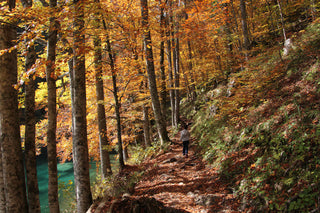
1. Lake Minnewaska — New Paltz, New York
Distance: 2 miles (Lake Minnewaska Carriage Road Loop)
Difficulty: Easy to moderate
Best for: Fall foliage, lake views and scenic overlooks
Located in the Shawangunk Mountains of New York, Minnewaska State Park Preserve is known for its lakes, waterfalls and scenic overlooks. During the fall, the surrounding forests turn shades of red, orange and yellow, making it a popular destination for autumn hiking.
For a shorter hike, the Lake Minnewaska Carriage Road Loop offers approximately two miles of lakeside scenery. Visitors looking for a longer adventure can explore additional trails leading to waterfalls and overlooks. Before visiting, check the official Minnewaska trail map to plan a route that fits your experience level.
TiCK TiP: Cooler weather doesn’t necessarily mean ticks are gone. According to the New York State Department of Health, adult blacklegged ticks are especially active from mid-August through November and can remain active whenever temperatures are above freezing. Stay on cleared trails, avoid brushing against vegetation and check yourself for ticks after hiking.
New York also provides a regional tick risk map showing the relative risk of encountering infected blacklegged ticks across the state. The map reflects regional surveillance data rather than conditions on any specific trail.

Photo: Juliancolton / Wikimedia Commons / CC BY-SA 4.0
2. Tumbled Rocks Trail — Devil’s Lake State Park, Wisconsin
Distance: Approximately 1 mile one-way
Difficulty: Easy
Best for: Lakeside views, fall foliage and a relatively flat hike
Located in Devil’s Lake State Park in Baraboo, Wisconsin, Tumbled Rocks Trail follows the western shoreline of Devil’s Lake, offering views of the water, surrounding bluffs and large quartzite boulders scattered along the trail. During the fall, the wooded bluffs turn shades of red, orange and yellow, creating a scenic backdrop for hikers.
Unlike some of the park’s steeper bluff trails, Tumbled Rocks Trail offers a relatively flat route along the lake. However, the rocky terrain can be uneven in places, so sturdy footwear is recommended. Hikers can enjoy the shoreline on its own or connect to other trails for a longer route. The Wisconsin Department of Natural Resources provides additional trail information, while the Devil’s Lake trail guide offers descriptions of the park’s hiking options.
TiCK TiP: Tick season doesn’t necessarily end when temperatures start dropping. According to the Wisconsin Department of Health Services, blacklegged ticks are found throughout Wisconsin and can remain active during the fall. When hiking, stay toward the center of trails, avoid brushing against vegetation and check yourself for ticks afterward. Wisconsin’s Fight the Bite campaign offers additional recommendations for preventing tick bites.
Before heading out, check the Wisconsin DNR’s current park conditions for trail updates and seasonal information.

Photo: Good Free Photos / Public Domain
3. Empire Bluff Trail — Sleeping Bear Dunes, Michigan
Distance: 1.5 miles round trip
Difficulty: Moderate
Best for: Lake Michigan views, fall foliage and scenic overlooks
Located in Sleeping Bear Dunes National Lakeshore, Empire Bluff Trail takes hikers through a wooded landscape before opening up to views of Lake Michigan and the surrounding sand dunes. During the fall, the beech-maple forest turns shades of yellow, orange and red, making the trail a popular spot for enjoying Michigan’s autumn scenery.
The 1.5-mile out-and-back trail includes some hills, stairs and boardwalk sections before reaching an overlook above Lake Michigan. According to the National Park Service, the trail is moderately difficult and typically takes less than an hour to complete. For more information about visiting the area, check the Sleeping Bear Dunes National Lakeshore website.
TiCK TiP: Michigan is home to several tick species, including blacklegged ticks, which can transmit the bacteria that cause Lyme disease. According to the Michigan Department of Health and Human Services, tick exposure is a concern in wooded and grassy environments. Stay on designated trails, avoid brushing against vegetation and check yourself for ticks after hiking. The Northwest Health Department also provides recommendations for preventing tick bites.

Photo: Rachel Kramer / Wikimedia Commons / CC BY 2.0
4. Stony Man Trail — Shenandoah National Park, Virginia
Distance: Approximately 1.6 miles (loop)
Difficulty: Easy to moderate
Best for: Mountain views, fall foliage and scenic overlooks
Located in Shenandoah National Park, Stony Man Trail offers some of the park’s most impressive views without requiring a long or particularly difficult hike. The trail winds through a wooded landscape before reaching a rocky overlook with sweeping views of the Shenandoah Valley and surrounding Blue Ridge Mountains. During the fall, the mountainsides turn shades of red, orange and yellow, making it a popular destination for enjoying Virginia’s autumn scenery.
The approximately 1.6-mile loop is relatively short, with a gradual climb to the overlook. According to the National Park Service, the hike is considered one of the park’s easier options for reaching a scenic summit. Visitors can also explore the park’s other trails and overlooks along Skyline Drive. Before heading out, check the Shenandoah National Park website for current conditions and potential road closures.
TiCK TiP: Virginia is home to several tick species, including blacklegged ticks, which can transmit the bacteria that cause Lyme disease. According to the Virginia Department of Health, lone star ticks are also found throughout the state, though they’re most common at lower elevations, and adult females can be identified by the distinctive white spot on their backs. However, not all ticks have easily recognizable markings, so checking yourself carefully after hiking is important. The department’s tick identification chart can help hikers recognize different tick species.

Photo: Katy Cain / NPS / Wikimedia Commons / CC BY 2.0
5. Ledges Trail — Cuyahoga Valley National Park, Ohio
Distance: 1.8 miles (loop)
Difficulty: Moderate
Best for: Fall foliage, rock formations and forest scenery
Located in Cuyahoga Valley National Park, Ledges Trail takes hikers through a wooded landscape filled with towering rock formations, moss-covered sandstone and scenic overlooks. During the fall, the surrounding forest turns shades of yellow, orange and red, making it a scenic destination for enjoying Ohio’s autumn foliage.
The 1.8-mile loop follows a rocky, unpaved trail with uneven terrain and some steps. According to the National Park Service, hikers can explore the rock formations and visit Ledges Overlook for views of the surrounding landscape. Sturdy footwear is recommended, especially when the trail is wet or slippery. Before visiting, check the park’s current conditions for trail updates and closures.
TiCK TiP: Fall is an important time to watch for blacklegged ticks in Ohio. According to the Ohio Department of Health, adult blacklegged tick activity typically increases during October and November. These ticks can transmit the bacteria that cause Lyme disease and may remain active whenever temperatures are above freezing. Stay on marked trails, avoid brushing against vegetation and check yourself for ticks after hiking.
 Photo: Erik Drost / Wikimedia Commons / CC BY 2.0
6. Black Rock Mountain State Park — Georgia
Distance: 2.2 miles (Tennessee Rock Trail loop)
Difficulty: Moderate
Best for: Mountain views, fall foliage and scenic overlooks
Located in Georgia’s Blue Ridge Mountains, Black Rock Mountain State Park is the state’s highest-elevation state park, offering sweeping mountain views and colorful fall foliage. During the fall, the park’s wooded trails and scenic overlooks make it a popular destination for enjoying northern Georgia’s autumn scenery.
The 2.2-mile Tennessee Rock Trail loop takes hikers through forested terrain to overlooks with views of the surrounding mountains. According to Georgia State Parks, the park also offers the more challenging 7.2-mile James E. Edmonds Trail for hikers looking for a longer route. Visitors can check the Black Rock Mountain State Park website for additional trail information and current park conditions.
TiCK TiP: Georgia is home to several tick species, including lone star ticks and American dog ticks. According to the Georgia Department of Public Health, ticks can transmit diseases to humans, making prevention important even during cooler fall weather. Hikers should stay near the center of marked trails, avoid brushing against vegetation and check themselves for ticks after spending time outdoors.
 Photo: Thomson20192 / Wikimedia Commons / Public Domain
7. Bear Lake to Emerald Lake — Rocky Mountain National Park, Colorado
Distance: Approximately 3.6 miles round trip
Difficulty: Moderate
Best for: Alpine lakes, mountain views and fall foliage
Located in Rocky Mountain National Park, the Bear Lake to Emerald Lake Trail takes hikers through forested mountain terrain and past several scenic alpine lakes. During the fall, the park’s aspen trees turn shades of gold and orange, creating a colorful contrast against the surrounding mountains. According to the National Park Service, fall also brings cooler temperatures and the possibility of early snowfall at higher elevations.
The approximately 3.6-mile out-and-back hike begins at Bear Lake and passes Nymph Lake and Dream Lake before reaching Emerald Lake. According to the National Park Service’s Bear Lake trail guide, the trail gains approximately 771 feet in elevation on the way to Emerald Lake. Hikers should check the Rocky Mountain National Park website for current trail conditions and any seasonal access restrictions before visiting.
TiCK TiP: Although Colorado’s higher elevations generally have a lower risk of tick exposure than some other hiking destinations, hikers should still check themselves for ticks after spending time outdoors. Staying on marked trails and avoiding contact with tall grass and vegetation can help reduce exposure. Checking clothing, gear and exposed skin after hiking is an important part of tick prevention.
 Photo: Gaylon Yancy / Wikimedia Commons / CC BY 2.0
8. Multnomah–Wahkeena Loop — Columbia River Gorge, Oregon
Distance: Approximately 4.6 miles (loop)
Difficulty: Moderate to strenuous
Best for: Waterfalls, forest scenery and fall foliage
Located in Oregon’s Columbia River Gorge, the Multnomah–Wahkeena Loop takes hikers past waterfalls, moss-covered forests and scenic viewpoints. The route connects two of the area’s best-known waterfalls, Multnomah Falls and Wahkeena Falls, with several smaller waterfalls and cascades along the way. During the fall, changing leaves add shades of yellow and orange to the surrounding greenery.
The approximately five-mile loop features steep climbs, switchbacks and sections of uneven terrain. According to Friends of the Columbia Gorge, the loop covers about 4.6 miles and gains roughly 1,700 feet in elevation. The Washington Trails Association also provides detailed trail descriptions and directions. Wet weather can make portions of the trail slippery, so sturdy footwear is recommended. Check the U.S. Forest Service for current trail conditions and closures before visiting.
TiCK TiP: Oregon is home to western blacklegged ticks, which can transmit Borrelia burgdorferi, the bacterium that causes Lyme disease. According to the Oregon Health Authority, these ticks generally inhabit wetter areas west of the Cascade Mountains. Although locally acquired Lyme disease is relatively uncommon in Oregon, hikers should still take precautions. Stay on established trails, avoid brushing against vegetation and check yourself for ticks after spending time outdoors.

Photo: Karsten Winegeart / Unsplash


