
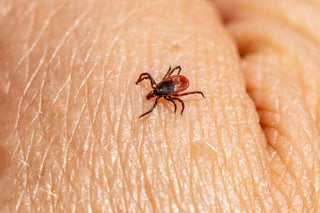
Most tick-borne illnesses give you a window. Lyme disease, for example, generally needs a tick to be attached for 24 to 48 hours before it can transmit. Powassan virus doesn't offer that grace period. According to the Massachusetts Department of Public Health, there is evidence that Powassan virus can spread from an infected tick into a person in as little as 15 minutes after attachment. This means the tick you brushed off in a hurry, before you ever felt it, may already have done its damage.
What Powassan virus is
Powassan virus is spread by infected blacklegged (deer) ticks – the same ticks responsible for Lyme disease, babesiosis, and anaplasmosis. The CDC describes it as rare but increasing, with most U.S. cases occurring in the Northeast and Great Lakes regions, generally from late spring through mid-fall; when ticks are most active. Unlike Lyme, there's no vaccine and no specific treatment – care is limited to supportive treatment like rest, fluids, and hospital monitoring for severe cases.
Symptoms don't show up immediately. The Massachusetts Department of Public Health notes that illness typically begins one to five weeks after the bite of an infected tick. Early symptoms may look like a bad flu: fever, headache, vomiting, and weakness, but Powassan can progress to more severe, neuroinvasive disease: encephalitis (inflammation of the brain) or meningitis (inflammation of the tissue around the brain and spinal cord) – with symptoms including confusion, loss of coordination, slurred speech, and seizures. Mass DPH reports that approximately 10% of people who develop this severe form of the disease die, and survivors can be left with long-term neurological effects.
Why 2026 is drawing more attention to Powassan
Powassan is still rare in absolute terms, but the trend line is unmistakable. 2025 was a record year, with 76 reported U.S. cases – the most ever reported in a single year – and New England carried a disproportionate share of that total, including cases in Massachusetts, Connecticut, Maine, and New Hampshire. That momentum has continued into 2026: Rhode Island confirmed a new case in a Providence County resident who began showing symptoms in May, and Maine confirmed its own first case of the year around the same time. Experts point to warmer weather extending the tick season as a key factor behind the rising numbers, alongside increased awareness and testing among clinicians.
It's worth keeping this in perspective. Powassan remains far rarer than Lyme disease, and most tick bites – even from infected ticks – do not result in illness. The reason it deserves attention isn't that it's common; it's that the speed of transmission changes the formula on prevention. With Lyme, a same-day tick check can realistically catch and remove a tick before attachment or infection occurs. With Powassan, that window may already be closing by the time you notice the tick at all.
What this means for tick prevention
Because Powassan can transmit so quickly, the usual advice to "check for ticks once you’re done with your activity" isn't quite good enough on its own. Prevention has to start before you're ever bitten:
-
Use EPA-registered repellents – permethrin treated clothing and/or gear.
-
Wear long pants tucked into socks and long sleeves in wooded, brushy, or grassy areas.
-
Check frequently, not just at the end of the day – especially in high-risk areas during peak tick season (May through July for nymphs, which are harder to spot).
-
Focus tick checks on warm, moist areas of the body – behind the knees, armpits, groin, scalp, and behind the ears.
-
Remove any attached tick immediately using fine-point tweezers, like on the TiCK SiDEKiCK, grasping close to the skin and pulling straight out with steady pressure.
Because there's no treatment once infection occurs, prevention and fast removal are genuinely the only tools available. Tools like TiCK MiTT, a reusable, chemical-free mitt designed to remove loose ticks from skin, fur, and gear in seconds, can make that daily check something the whole household actually keeps up with, rather than a step that gets skipped after a long day outside. If you've been in a tick habitat and develop flu-like symptoms – especially confusion, severe headache, or difficulty speaking in the weeks that follow – it's worth telling your doctor specifically about the tick exposure and asking whether Powassan should be part of the workup.
Frequently Asked Questions
How fast can Powassan virus infect you? Evidence suggests Powassan virus can transmit from an infected tick to a person in as little as 15 minutes after the tick attaches – much faster than Lyme disease, which generally requires 24 to 48 hours of attachment.
What are the first symptoms of Powassan virus? Early symptoms typically resemble the flu: fever, headache, vomiting, and weakness, usually appearing one to five weeks after a tick bite.
Is Powassan virus fatal? Approximately 10% of people who develop severe, neuroinvasive Powassan disease die from it, and survivors can experience long-term neurological complications.
Is there a treatment or vaccine for Powassan virus? No. There is no specific antiviral treatment and no vaccine for Powassan virus. Care focuses on supportive treatment such as rest, fluids, and hospitalization for severe cases.
Where is the Powassan virus most common in the U.S.? Most cases occur in the Northeast and Great Lakes/Upper Midwest regions, with Massachusetts, Maine, Connecticut, New Hampshire, New York, and Wisconsin among the states reporting cases in recent years.
Are Powassan virus cases increasing? Yes. 2025 was a record year with 76 reported U.S. cases, and case counts have been trending upward over the past decade as tick populations expand and awareness grows.
Sources: CDC; Massachusetts Department of Public Health; The Washington Post via Vaccine Advisor/HealthDay News; Fox News.


