
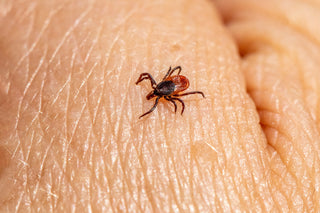
Not every tick can transmit Lyme disease. In the United States, Lyme disease is primarily spread through the bite of infected blacklegged ticks.
Which ticks can spread Lyme disease also depends on where you are in the country. Understanding the species associated with Lyme disease, where they live and what they look like can help you better understand a tick encounter.

What Ticks Spread Lyme Disease in the United States?
According to the CDC, Lyme disease bacteria are spread to people through the bites of infected blacklegged ticks.
In the Northeast, mid-Atlantic and north-central United States, the primary species associated with Lyme disease is the blacklegged tick (Ixodes scapularis).
Along the Pacific Coast, Lyme disease can be spread by the western blacklegged tick (Ixodes pacificus).
Knowing the species can provide useful context, but identifying a tick by appearance alone can sometimes be difficult because its size and appearance change throughout its life cycle.
What Is a Blacklegged Tick?
The blacklegged tick, sometimes called a deer tick, is an important Lyme disease vector in much of the eastern United States.
Blacklegged ticks go through four life stages: egg, larva, nymph and adult. After hatching, ticks must take a blood meal during each stage to continue their development.
Their small size can make them difficult to notice, particularly during the nymph stage.
Why Are Nymphal Ticks Important?
Nymphal blacklegged ticks are extremely small, which can make them difficult to find on the body.
The CDC notes that most people become infected with Lyme disease through the bites of immature ticks called nymphs. Nymphs are generally about the size of a poppy seed.
Because they can be so difficult to notice, thorough tick checks after spending time outdoors are important.
For a step-by-step routine, read How to Check for Ticks.
Can Every Blacklegged Tick Transmit Lyme Disease?
No. A blacklegged tick must be infected with Lyme disease-causing bacteria to potentially transmit the bacteria through its bite.
In the United States, Lyme disease is caused primarily by Borrelia burgdorferi and, rarely, Borrelia mayonii.
The percentage of ticks infected with Lyme disease bacteria can vary by geographic area.
How Do Blacklegged Ticks Become Infected?
Ticks can acquire Lyme disease bacteria while feeding on an infected host during an earlier stage of their life cycle.
Once infected, a tick may later transmit the bacteria while feeding on another host.
This is different from thinking of every blacklegged tick as automatically carrying Lyme disease bacteria. The tick species, whether the individual tick is infected and the circumstances of the bite all matter.
Where Are Lyme Disease Ticks Most Common?
Blacklegged ticks are found across much of the eastern United States, while western blacklegged ticks are found along the Pacific Coast.
However, simply being within a tick’s geographic range does not mean every tick in that area carries Lyme disease bacteria.
The CDC provides current maps showing the established and reported ranges of medically important tick species in the United States.
Does Finding a Blacklegged Tick Mean You Will Get Lyme Disease?
No.
Finding a blacklegged tick does not automatically mean Lyme disease was transmitted. The tick would need to be infected with Lyme disease-causing bacteria, and other factors surrounding the bite can matter.
One important consideration is how long an infected tick was attached.
For more information, read How Long Does a Tick Have to Be Attached to Transmit Lyme Disease?
What Other Ticks Might You Encounter?
Blacklegged ticks are not the only ticks people encounter in the United States.
Other medically important species include the American dog tick, lone star tick, brown dog tick and Gulf Coast tick. Different species are associated with different pathogens and illnesses.
The CDC provides information about tick species, their geographic ranges and diseases associated with them.
This is one reason recognizing that you found a tick does not automatically mean you were exposed to Lyme disease.
How Can You Reduce Your Chances of a Tick Bite?
Prevention starts before a tick attaches.
The CDC recommends strategies including avoiding contact with ticks when possible, using appropriate EPA-registered repellents, treating clothing and gear when appropriate and checking your body after spending time outdoors.
After outdoor activity:
- Check yourself and children for ticks.
- Check pets for ticks.
- Check clothing and gear.
- Shower soon after coming indoors.
- Pay close attention to areas where ticks can be difficult to see.
- TiCK MiTT can also be used to pick up loose and crawling ticks before they attach.
Frequently Asked Questions About Ticks and Lyme Disease
Can Every Tick Give You Lyme Disease?
No. In the United States, Lyme disease is primarily transmitted through the bite of infected blacklegged ticks and western blacklegged ticks.
Is a Deer Tick the Same as a Blacklegged Tick?
“Deer tick” is a common name used for the blacklegged tick, Ixodes scapularis.
Can Lone Star Ticks Transmit Lyme Disease?
The CDC does not identify the lone star tick as a vector of Lyme disease. Lone star ticks are associated with other health concerns, making correct tick information important.
Why Are Nymphs So Easy to Miss?
Nymphal ticks are extremely small. The CDC describes them as approximately the size of a poppy seed, making them difficult to notice during a tick check.
What Should I Do if I Find an Attached Tick?
Remove the tick promptly and properly, check your body for additional ticks and continue paying attention to your health afterward.
Read The Complete Guide to What to Do After Removing a Tick for the full process.
What Should You Remember About Ticks That Transmit Lyme Disease?
Not every tick transmits Lyme disease.
In the United States, Lyme disease is primarily associated with infected blacklegged ticks in the Northeast, mid-Atlantic and north-central regions and infected western blacklegged ticks along the Pacific Coast.
Even within these species, not every individual tick carries Lyme disease-causing bacteria.
Knowing which ticks are associated with Lyme disease is useful, but prevention remains important. Check yourself, children, pets, clothing and gear after spending time in tick habitat, and promptly remove attached ticks when you find them.


