
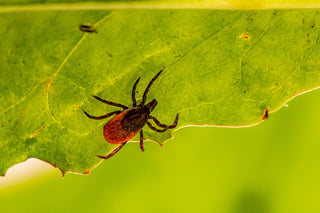
Lyme disease gets a lot of attention, but it isn’t the only illness ticks can transmit. Here’s what to know about anaplasmosis and ehrlichiosis, including their symptoms, how they differ from Lyme disease and why tick exposure matters.
Lyme disease may be the tick-borne illness most people recognize by name, but ticks can transmit other pathogens too.
Two examples are anaplasmosis and ehrlichiosis, separate bacterial diseases spread primarily through the bites of infected ticks. Both can cause symptoms like fever, headache and muscle aches, which means they may not immediately look like a tick-borne illness.
They are not forms of Lyme disease, and the tick species involved can differ. That is one reason information about a recent tick bite or possible exposure can be useful context if you become sick.
What Is Anaplasmosis?
Anaplasmosis is a tick-borne disease caused by the bacterium Anaplasma phagocytophilum.
According to the CDC, it is spread to people primarily through bites from infected blacklegged ticks (Ixodes scapularis) and western blacklegged ticks (Ixodes pacificus).
Those tick species matter because they can transmit more than one pathogen. For example, CDC says the blacklegged tick can transmit both A. phagocytophilum, which causes anaplasmosis, and Borrelia burgdorferi, the main bacterium responsible for Lyme disease in the United States.
That does not make anaplasmosis a type of Lyme disease. They are separate infections caused by different bacteria.
What Are the Symptoms of Anaplasmosis?
According to the CDC, signs and symptoms of anaplasmosis typically begin within one to two weeks after the bite of an infected tick.
- Early symptoms can include:
- Fever and chills
- Severe headache
- Muscle aches
- Nausea
- Vomiting
- Diarrhea
- Loss of appetite
The CDC’s clinical guidance gives a more specific typical window of 5 to 14 days after an infected tick bite and notes that many people do not remember being bitten.
Most cases involve mild or moderate symptoms, but severe illness can occur. CDC identifies delayed treatment, being 65 or older and having a weakened immune system as factors associated with greater risk of severe illness.
What Is Ehrlichiosis?
Ehrlichiosis is the general name for a group of diseases caused by Ehrlichia bacteria.
In the United States, the CDC identifies three bacteria associated with human ehrlichiosis: Ehrlichia chaffeensis, E. ewingii and E. muris eauclairensis. The majority of reported cases are caused by E. chaffeensis.
The tick involved depends on the particular Ehrlichia species. CDC says E. chaffeensis and E. ewingii are transmitted by the lone star tick (Amblyomma americanum), while E. muris eauclairensis is spread by the blacklegged tick.
So it is more accurate to say ehrlichiosis is commonly associated with lone star ticks, rather than saying lone star ticks are the only ticks that can spread it.
What Are the Symptoms of Ehrlichiosis?
Ehrlichiosis symptoms typically begin within one to two weeks after the bite of an infected tick.
- Fever
- Chills
- Severe headache
- Muscle aches
- Nausea, vomiting or diarrhea
- Loss of appetite
- Confusion
- Rash
Rash is an important difference to understand, but it does not appear in everyone with ehrlichiosis.
The CDC says up to one in three people with ehrlichiosis report a rash. Rash is generally more common in children than adults. For E. chaffeensis ehrlichiosis specifically, CDC clinical guidance says rash develops in up to 60% of children but fewer than 30% of adults.
That rash is not the same thing as the erythema migrans rash associated with Lyme disease.
Anaplasmosis vs. Ehrlichiosis: What’s the Difference?
Anaplasmosis and ehrlichiosis can look similar because several of their early symptoms overlap. But they are caused by different bacteria and are associated with different tick vectors.
|
Anaplasmosis |
Ehrlichiosis |
|
|
Cause |
Anaplasma phagocytophilum |
Several Ehrlichia species |
|
Main U.S. tick vectors |
Blacklegged and western blacklegged ticks |
Lone star tick for E. chaffeensis and E. ewingii; blacklegged tick for E. muris eauclairensis |
|
Common symptoms |
Fever, chills, headache, muscle aches, gastrointestinal symptoms |
Fever, chills, headache, muscle aches, gastrointestinal symptoms; confusion may occur |
|
Rash |
Not a typical feature |
Can occur and is more common in children |
|
Lyme disease? |
No |
No |
CDC clinical guidance specifically lists rash as uncommon or rarely reported in anaplasmosis, while rash is a recognized feature of ehrlichiosis.
Even with those differences, symptoms alone are not a reliable way for someone to determine which infection they may have.
How Are Anaplasmosis and Ehrlichiosis Different From Lyme Disease?
Lyme disease, anaplasmosis and ehrlichiosis are all tick-borne bacterial infections, but they are not the same disease.
They Are Caused by Different Bacteria
In the United States:
- Lyme disease is caused mainly by Borrelia burgdorferi and, rarely, Borrelia mayonii.
- Anaplasmosis is caused by Anaplasma phagocytophilum.
- Ehrlichiosis is caused by several Ehrlichia species.
The Tick Relationships Are Different
Lyme disease and anaplasmosis can both be transmitted by blacklegged ticks. CDC says blacklegged ticks carry B. burgdorferi as well as A. phagocytophilum.
Most U.S. ehrlichiosis caused by E. chaffeensis or E. ewingii, on the other hand, is associated with the lone star tick. A less common form caused by E. muris eauclairensis is associated with blacklegged ticks.
Their Symptoms Can Overlap
Fever, headache, fatigue or malaise, and muscle aches can occur across these diseases. Lyme disease can also cause its characteristic erythema migrans rash, while ehrlichiosis may cause a different rash and rash is uncommon in anaplasmosis.
That overlap is one reason not to try to identify a tick-borne disease from symptoms alone.
Can One Tick Carry More Than One Pathogen?
Yes, that can happen.
The CDC says blacklegged ticks transmit several pathogens, including Borrelia burgdorferi, which causes Lyme disease; Anaplasma phagocytophilum, which causes anaplasmosis; and Babesia microti, which causes babesiosis. CDC also specifically notes that coinfections have been reported.
CDC defines a coinfection as having more than one tick-borne disease at the same time and says the frequency varies by location and over time. It identifies anaplasmosis as the most common coinfection reported with Lyme disease.
Johns Hopkins similarly notes that deer ticks can transmit more than one pathogen in a single bite, including Borrelia, Anaplasma and Babesia.
The important distinction is that a tick species being capable of carrying several pathogens does not mean every individual tick carries all of them.
Where Are Anaplasmosis and Ehrlichiosis Found?
The two diseases also have somewhat different geographic patterns in the United States.
The CDC says anaplasmosis is most commonly reported in the Northeast and upper Midwest.
Ehrlichiosis caused by E. chaffeensis and E. ewingii is reported most often in the southeastern and south-central United States, extending from the East Coast westward to Texas. CDC’s clinical overview also identifies south-central, southeastern and mid-Atlantic states as the primary areas for those infections.
The exact geography also depends on the tick and pathogen involved, so knowing where a possible exposure happened can provide additional context.
Why Does Knowing Which Tick Bit You Matter?
Different tick species can transmit different pathogens.
For example, CDC lists blacklegged ticks as vectors for Lyme disease, anaplasmosis, babesiosis and several other infections. Lone star ticks transmit E. chaffeensis and E. ewingii, the bacteria responsible for common forms of ehrlichiosis.
That means identifying the tick involved may provide useful information about what pathogens that type of tick is capable of transmitting.
If you’ve removed an attached tick, knowing what to do after finding a tick can help you keep track of useful information about the exposure.
But identifying or testing a tick is not the same as diagnosing the person who was bitten. You can learn more about that distinction in Can You Test a Tick for Lyme Disease?
And an important TiCK MiTT distinction: TiCK TEST tests a removed tick for Borrelia burgdorferi, one of the bacteria that causes Lyme disease. It is not a complete tick-borne disease panel and does not test for anaplasmosis or ehrlichiosis. It also does not diagnose the person who was bitten.
What Should You Do If You Feel Sick After a Tick Bite?
You don’t need to determine which tick-borne disease you might have on your own.
The CDC advises people to contact a healthcare provider if they become ill after a tick bite or after spending time in areas where ticks live. For ehrlichiosis, CDC specifically mentions grassy, brushy and wooded areas; its anaplasmosis guidance similarly advises seeing a provider if you become ill after a bite or exposure in tick habitat.
After a known tick bite, CDC recommends telling a healthcare provider:
-
That you recently had a tick bite
-
When the bite happened
-
Where you most likely acquired the tick
You also don’t need to wait for a classic Lyme-style bullseye rash before mentioning a possible tick exposure. Anaplasmosis does not typically cause that rash, and ehrlichiosis can cause a different type of rash.
The Bigger Takeaway
Lyme disease may be the tick-borne illness everyone knows by name, but a tick bite isn’t only about Lyme.
Anaplasmosis and ehrlichiosis are separate bacterial infections with symptoms that can overlap with Lyme disease and with each other. The ticks associated with them also differ: blacklegged ticks can transmit Lyme disease and anaplasmosis, while lone star ticks are important vectors for common forms of ehrlichiosis.
Knowing about a possible tick exposure — including when and where it happened — can give symptoms additional context to share with a healthcare provider.
You don’t need to memorize every tick-borne disease before heading outside. Knowing that Lyme isn’t the only one is a pretty good place to start.
Frequently Asked Questions
What is the difference between anaplasmosis and ehrlichiosis?
They are separate bacterial tick-borne diseases. Anaplasmosis is caused by Anaplasma phagocytophilum and is primarily spread by blacklegged and western blacklegged ticks. Ehrlichiosis is caused by several Ehrlichia species; common forms in the United States are spread by lone star ticks, while E. muris eauclairensis is spread by blacklegged ticks.
What are the symptoms of anaplasmosis?
CDC lists fever, chills, severe headache, muscle aches, nausea, vomiting, diarrhea and loss of appetite among the possible early symptoms. Symptoms generally begin within one to two weeks after the bite of an infected tick.
What are the symptoms of ehrlichiosis?
Possible early symptoms include fever, chills, severe headache, muscle aches, nausea, vomiting, diarrhea, loss of appetite, confusion and rash. Symptoms typically begin within one to two weeks of an infected tick bite.
Is ehrlichiosis the same as Lyme disease?
No. Lyme disease is primarily caused by Borrelia burgdorferi in the United States, while ehrlichiosis is caused by Ehrlichia bacteria. They can share some symptoms, but they are different infections.
Can the same ticks spread Lyme disease and anaplasmosis?
Yes. CDC says blacklegged ticks can transmit both Borrelia burgdorferi, which causes Lyme disease, and Anaplasma phagocytophilum, which causes anaplasmosis.
Does ehrlichiosis cause a bullseye rash?
Ehrlichiosis can cause a rash, but it is not the erythema migrans rash associated with Lyme disease. CDC describes the rash associated with E. chaffeensis ehrlichiosis as ranging from maculopapular to petechial, and says it is more commonly reported in children than adults.
Sources and
- CDC — About Anaplasmosis
- CDC — Clinical Signs and Symptoms of Anaplasmosis
- CDC — Transmission and Epidemiology of Anaplasmosis
- CDC — About Ehrlichiosis
- CDC — Ehrlichiosis: Causes and How It Spreads
- CDC — Signs and Symptoms of Ehrlichiosis
- CDC — Clinical Signs and Symptoms of Ehrlichiosis
- CDC — About Lyme Disease
- CDC — How Lyme Disease Spreads
- CDC — Where Ticks Live
- CDC — Testing and Diagnosis for Lyme Disease
- CDC — What to Do After a Tick Bite
-
Johns Hopkins Lyme Disease Research Center — Frequently Asked Questions


