
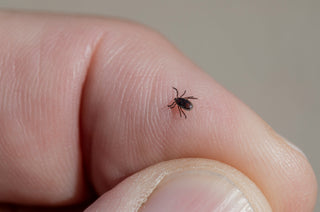
Many people assume that once temperatures drop, ticks disappear. Unfortunately, experts say that’s not true. In reality, relying on cold weather for protection can increase your risk of tick exposure.
Can Ticks Stay Active During Winter?
Yes. Adult blacklegged ticks, often called deer ticks, can remain active throughout the winter whenever temperatures rise above freezing and snow cover is absent. Cold weather alone doesn’t eliminate ticks — instead, they change their behavior to survive.
Snow helps insulate the ground, keeping temperatures beneath it relatively stable. When snow is absent, ticks retreat into leaf litter, soil, or beneath rocks to escape harsher air temperatures. These survival strategies allow ticks to remain alive through winter and become active again during mild winter days or early spring thaws.
Key takeaway: Winter thaws and mild days still carry tick risk.
Why Lyme Disease Risk Doesn’t Stop in Winter
The belief that cold weather kills ticks has real public health consequences. In Pennsylvania, Lyme disease reached a record high in 2025, with more than 17,700 reported cases, the highest ever documented in the state.
Experts attribute rising tick populations to a combination of factors, including:
-
Reforestation and expanded tick habitat
-
Growing deer and mouse populations, which serve as key tick hosts
-
Milder winters that allow ticks to survive longer
Because ticks remain active beyond summer, exposure can occur year-round.
Are Ticks Only a Problem in Northern States?
No. Winter tick activity isn’t confined to colder regions.
In South Carolina, experts have found that at least one tick species remains active throughout the entire year. Notably, the species responsible for spreading Lyme disease is actually most active during the colder months.
Researchers note that the state is home to nine different tick species, with some level of activity occurring during every season. Public health officials also report that emergency room visits related to tick bites have climbed to a five-year high nationwide, highlighting that winter does not eliminate tick risk.
Common Winter Tick Questions (Q&A)
Do ticks die when it freezes?
No. Ticks survive freezing temperatures by hiding under snow, soil, rocks, and leaf litter. Snow can actually help insulate them.
Can ticks bite in winter?
Yes. Adult blacklegged ticks can bite whenever temperatures rise above freezing, especially during winter warm spells.
Are ticks active when there’s snow on the ground?
They are less active on the surface, but they remain alive underneath the snow and can emerge when conditions change.
Is Lyme disease a risk in winter?
Yes. Ticks that spread Lyme disease can remain active in winter, and cases continue to be reported year-round.
Where are ticks most commonly found in winter?
Ticks are typically found near the ground in forests, tall grass, brush, leaf litter, and along trail edges — places people and pets still frequent during colder months.
Why Year-Round Tick Prevention Matters
Ticks can transmit serious illnesses, including:
-
Lyme disease
-
Rocky Mountain spotted fever
-
Ehrlichiosis
-
Alpha-gal syndrome, a potentially life-threatening red meat allergy
Because ticks can attach quickly, experts emphasize that daily tick checks are one of the most effective prevention strategies — regardless of the season.
Simple Steps to Reduce Tick Risk
-
Perform tick checks after outdoor activities, even in winter
-
Pay close attention to pets, children, ankles, and clothing
-
Remove loose ticks before they attach
-
Avoid relying on cold weather for protection
For people looking to make tick checks easier, tools like TiCK MiTT can help remove loose ticks from skin, clothing, and pet fur before they bite — without the use of chemicals. If a tick is already attached, experts recommend using fine-tipped tweezers or a proper tick removal tool.
Bottom Line
Cold weather does not eliminate ticks. Whether it’s a warm January afternoon or a snow-covered trail, ticks can still pose a risk. Staying informed and maintaining year-round prevention habits is key to protecting yourself, your family, and your pets.


