
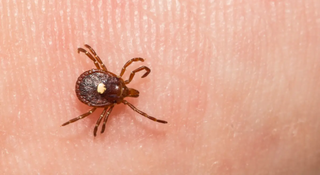
For parents, tick season brings a particular kind of anxiety. Children spend more time low to the ground, in exactly the vegetation where ticks wait. They're less likely to notice a crawling tick, less able to sit still for a thorough check, and less equipped to remove one safely on their own.
And the stakes are real. Lyme disease cases are surging across the Northeast and Midwest. Michigan has seen confirmed cases nearly quadruple in three years. New York State averages more than 17,500 new Lyme cases per year. Ticks carrying Lyme and other diseases have now been documented in 70% of New York City parks, according to a Columbia University study — meaning tick exposure is no longer just a camping or hiking risk. It's a playground risk.
Here is what every parent needs to know.
Why Kids Are at Higher Risk
Children are disproportionately exposed to ticks for several reasons:
They play in prime tick habitat. Ticks are most concentrated in the transition zones between lawns and wooded areas — exactly where children play. They cling to low grass, leaf litter, and brush, attaching when a host brushes past.
They're harder to check thoroughly. A full tick check on a squirming child requires patience and a system. Nymph-stage ticks — which are responsible for the majority of Lyme disease cases — can be the size of a poppy seed in late spring and early summer, according to Byron Backenson of the New York State Department of Health. They are genuinely easy to miss.
They can't always communicate symptoms. Young children may not be able to articulate the fatigue, headache, or joint aches that are early Lyme disease symptoms. Parents need to be watching for behavioral changes and visible signs — especially the bull's-eye rash — in the weeks following any tick exposure.
How to Do a Tick Check on a Child
Make the tick check a non-negotiable part of the post-outdoor routine — as automatic as washing hands before dinner. Do it within two hours of coming inside.
Work systematically through these areas, which are favorite hiding spots for ticks on children:
- Scalp and hairline — run fingers through hair section by section
- Behind and around the ears
- Back of the neck
- Underarms
- Belly button
- Groin and waistband area
- Behind the knees
- Between the toes
For younger children, make it a game. For older kids, teach them to do their own check so it becomes a lifelong habit.
After the tick check, put outdoor clothing directly into a hot dryer for 10 minutes — heat kills ticks that may still be clinging to fabric, as recommended by Backenson.
How to Remove a Tick From a Child — Safely
Speed and technique both matter. Jean Tsao, a tick disease ecologist at Michigan State University, is direct: "Pull them off sooner rather than later. It reduces the chance you will get infected. The shorter time it feeds, the lower the risk of infection."
What to do:
- Use fine-tipped tweezers or a purpose-designed tick removal tool
- Grasp the tick as close to the skin's surface as possible
- Pull upward with steady, even pressure — no twisting or jerking
- Clean the bite area with rubbing alcohol or soap and water afterward
- Save the tick in a sealed bag in case symptoms develop
What never to do: Linda Lobes, president of the Michigan Lyme Disease Association, warns that home remedies like petroleum jelly, nail polish, or a match flame can make things significantly worse. "If a tick gets agitated while it's attached, it regurgitates. Its stomach contents will now potentially be inside of you, and that puts people at higher risk of infection if the tick is carrying disease."
Squeezing the tick's body during removal carries the same risk. The goal is steady, upward traction — not compression.
What Symptoms to Watch For in Children After a Tick Bite
Monitor your child for the following in the 3 to 30 days after a known or suspected tick bite, per the CDC:
- A bull's-eye rash (erythema migrans) at or near the bite site — present in 70–80% of Lyme cases
- Fever and chills
- Fatigue that seems unusual for your child
- Headache
- Muscle or joint aches
Not every child will develop a visible rash, and some may not recall a tick bite at all. If symptoms appear, contact your pediatrician promptly and mention any recent outdoor activity. Early Lyme disease is successfully treated with antibiotics.
A Chemical-Free Tick Removal Tool Designed for Families
TiCK MiTT was developed by a family with firsthand experience of tick-borne illness, working with a tick scientist and product engineer to create a solution that is safe for children — no chemicals, no toxins, nothing that requires adult-only handling.
The Kids TiCK MiTT is specifically sized for children ages 8–12, making the tick check and removal process something older kids can begin to manage themselves — building the habits that protect them for life.
As tick populations surge across the Northeast and Midwest and ticks establish themselves in city parks, being prepared isn't an overreaction. It's parenting.
Available at Petco, Bass Pro Shops, and tickmitt.com.
→ [Shop Kids TiCK MiTT — Chemical-Free Tick Protection for Children]
Sources: Columbia University tick study (NYC parks); Byron Backenson, NYS Department of Health; Jean Tsao, Michigan State University; Linda Lobes, Michigan Lyme Disease Association; CDC; Michigan Department of Health and Human Services


